Cities are facing remarkably similar challenges. How do you decide which solutions are worth investing in? How do you measure success? How do you choose between competing priorities? How do you build a convincing business case? And perhaps most importantly, how do you avoid repeating mistakes that other cities have already made?
These questions sit at the heart of replication.
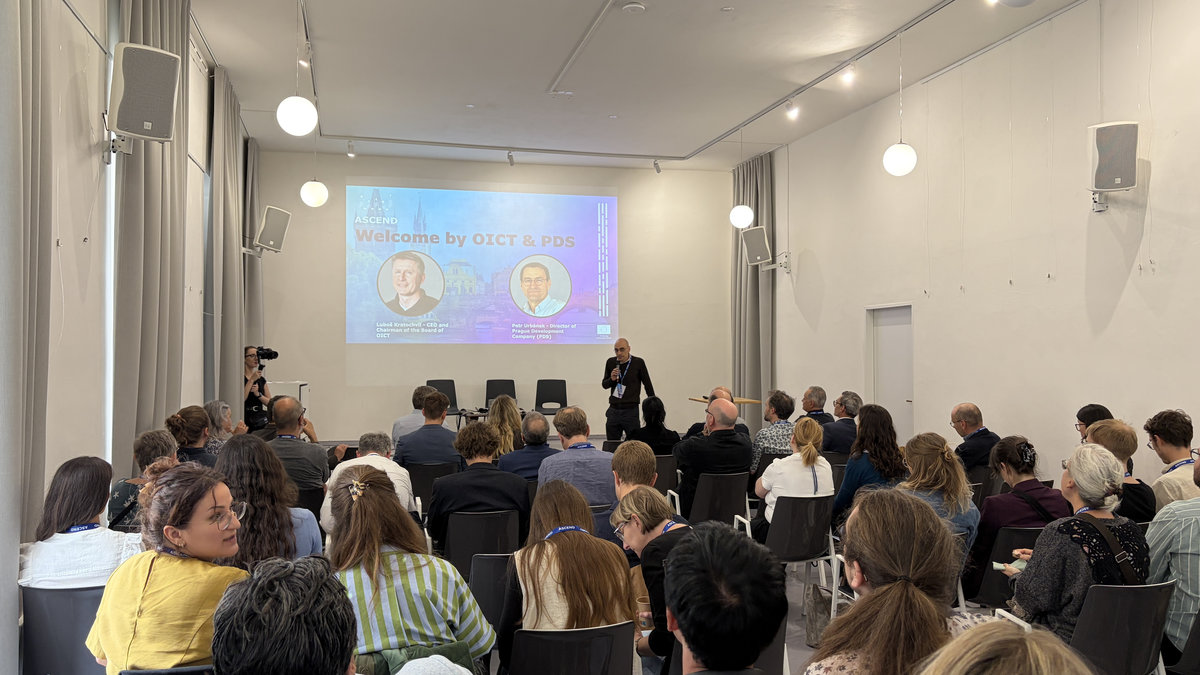
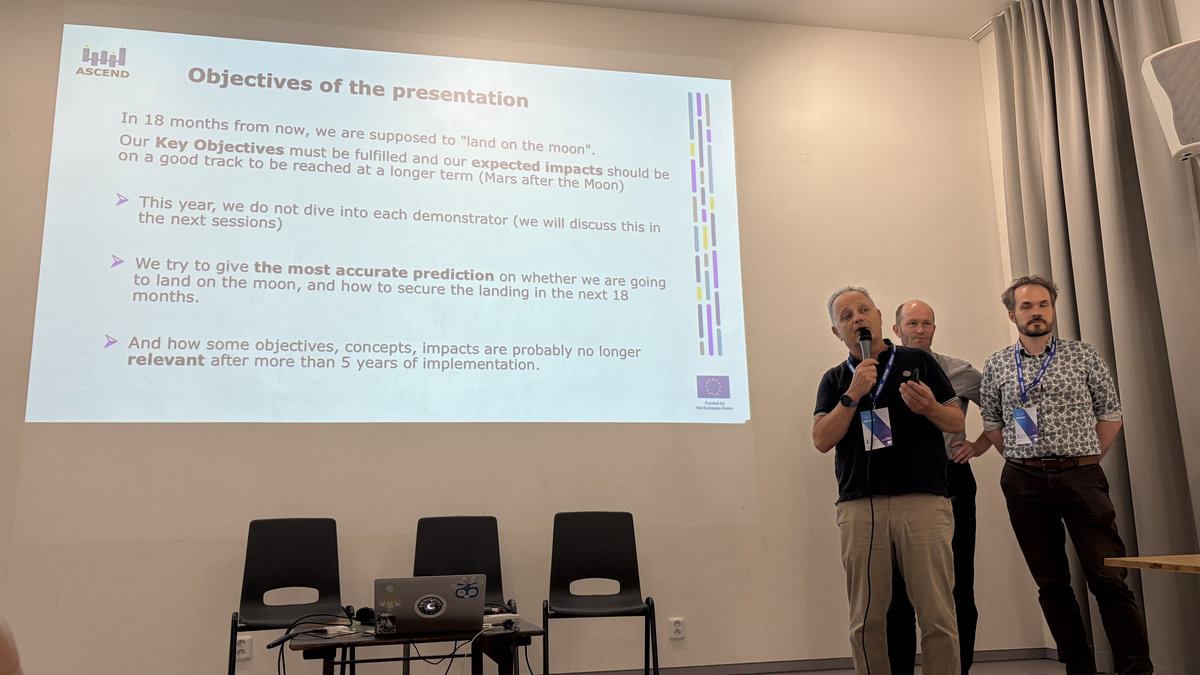
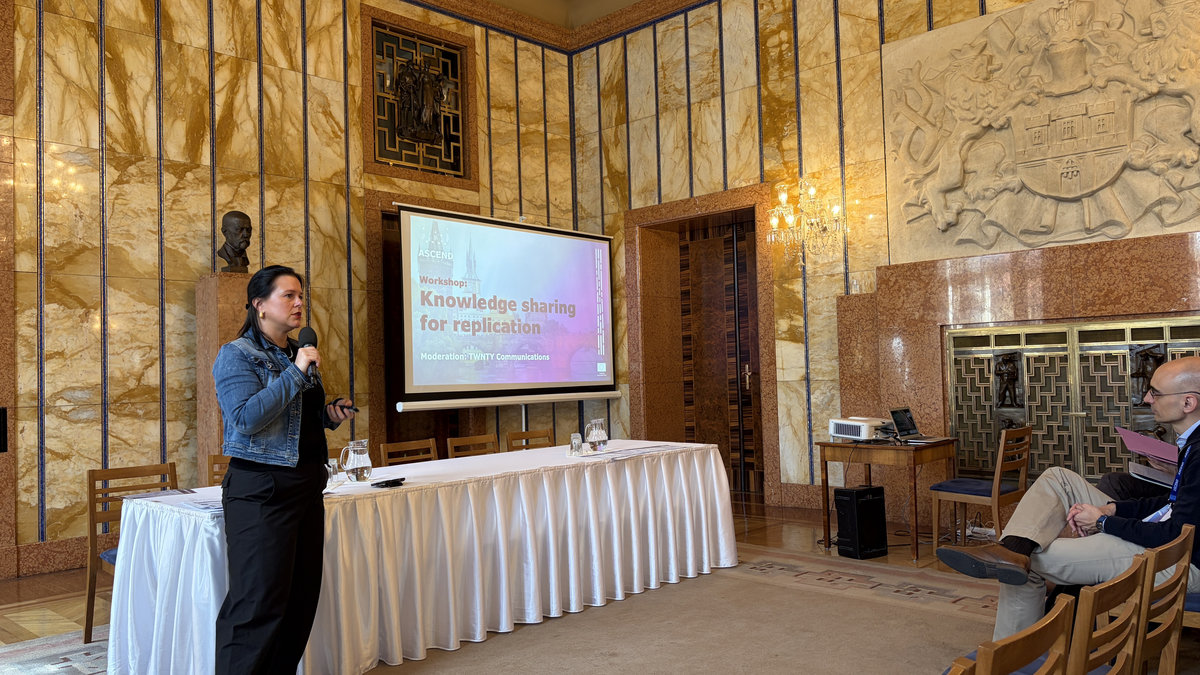
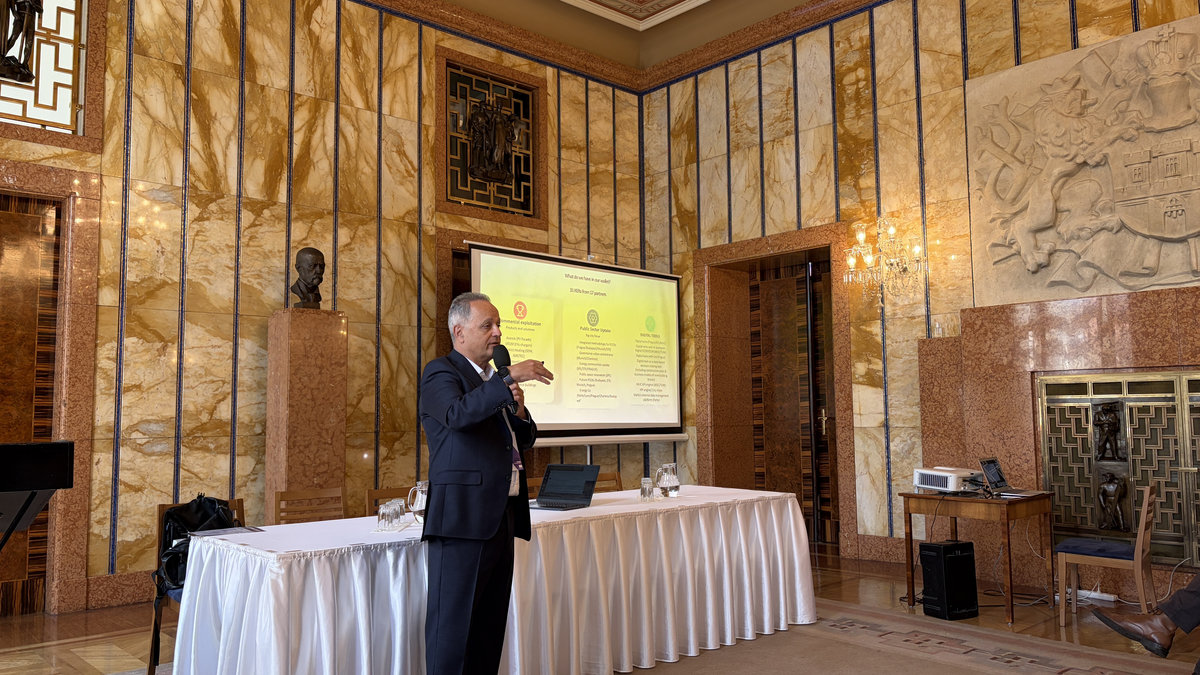
At ASCEND's General Assembly in Prague, partners explored how knowledge generated through Positive Clean Energy Districts can be transformed into practical resources that help other cities move faster and with greater confidence.
One recurring challenge is simply finding relevant examples. Municipalities often know what they want to achieve but struggle to identify practical solutions that have already been tested elsewhere. The State-of-the-Art ASCEND Solution Repository is designed to address this gap by bringing together implementation experiences, lessons learned and tested approaches from across the project.
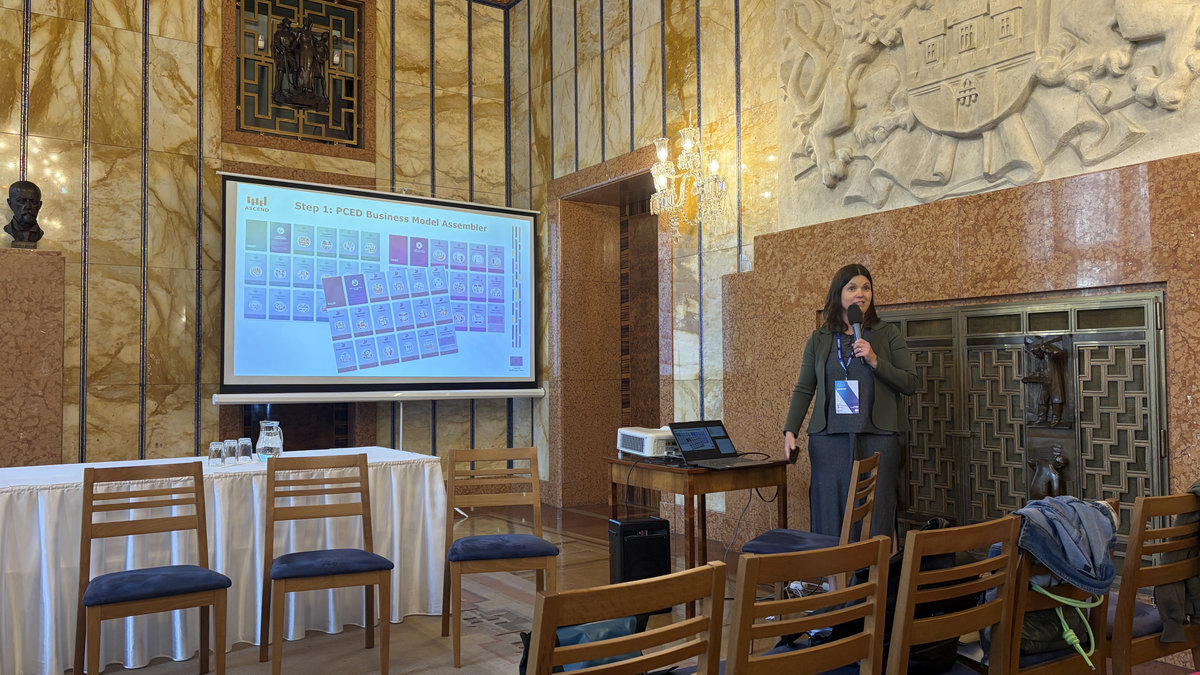
Another challenge concerns governance and financing. Even when cities identify a promising solution, questions remain around partnerships, ownership structures, risk allocation and business models. The PCED Business Model Assembler was developed to help cities explore these questions in a structured way, allowing users to combine different governance arrangements, financing approaches and value creation models.
Cities also face growing pressure to make evidence-based decisions. Urban systems are increasingly complex, involving multiple sectors, stakeholders and competing priorities. The City Model Indicator Engine helps transform diverse urban data into meaningful indicators that support monitoring and decision-making. Complementing this work, the Multi-Criteria Decision Analysis Tool helps cities compare different options by evaluating environmental, technical, economic and social considerations simultaneously.
 |  |  |
Financing presents another persistent challenge. Many cities struggle to demonstrate the value of innovative projects to investors or funding bodies. The Cost-Benefit Analysis Matching Tool helps bridge this gap by connecting project proposals with evaluation methods and financing considerations, making it easier to build robust investment cases.
Knowledge sharing, however, is not only about tools and methodologies. It is also about people.
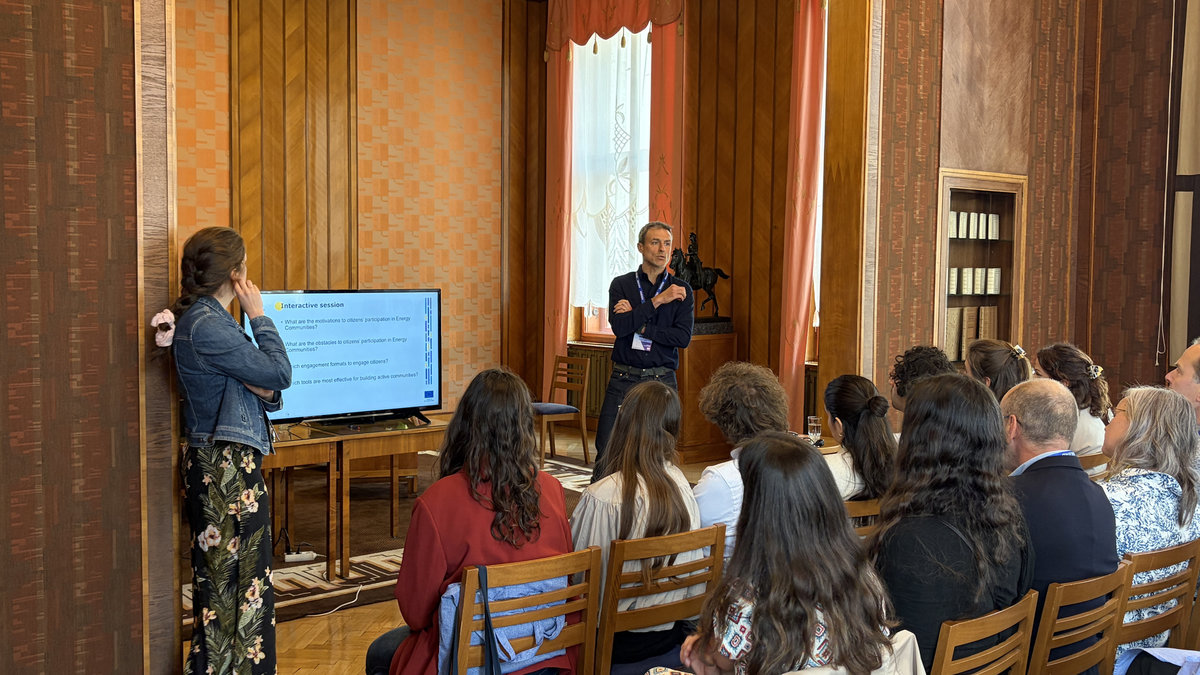
Cities frequently cite a lack of internal capacity, limited opportunities for peer exchange and difficulties accessing practical implementation knowledge. The Local Transitions Learning Centre responds to this challenge by creating opportunities for learning, collaboration and exchange between cities, practitioners and stakeholders working on similar issues.
 |  |  |
Taken together, these initiatives reflect a broader shift in how urban innovation is approached. The objective is no longer simply to test solutions. It is to ensure that the experience generated through those solutions can be understood, adapted and applied elsewhere.
No two cities will ever be identical. Different governance structures, political priorities and local contexts will always influence implementation. But, the barriers cities encounter are often surprisingly similar.
The value of replication therefore lies not in copying solutions, but in reducing uncertainty. By helping cities access knowledge, evaluate options, understand financing pathways and learn from the experiences of others, ASCEND is contributing to a future where urban transformation becomes easier to navigate.
Because the faster cities can learn from one another, the faster they can move from ambition to action.
