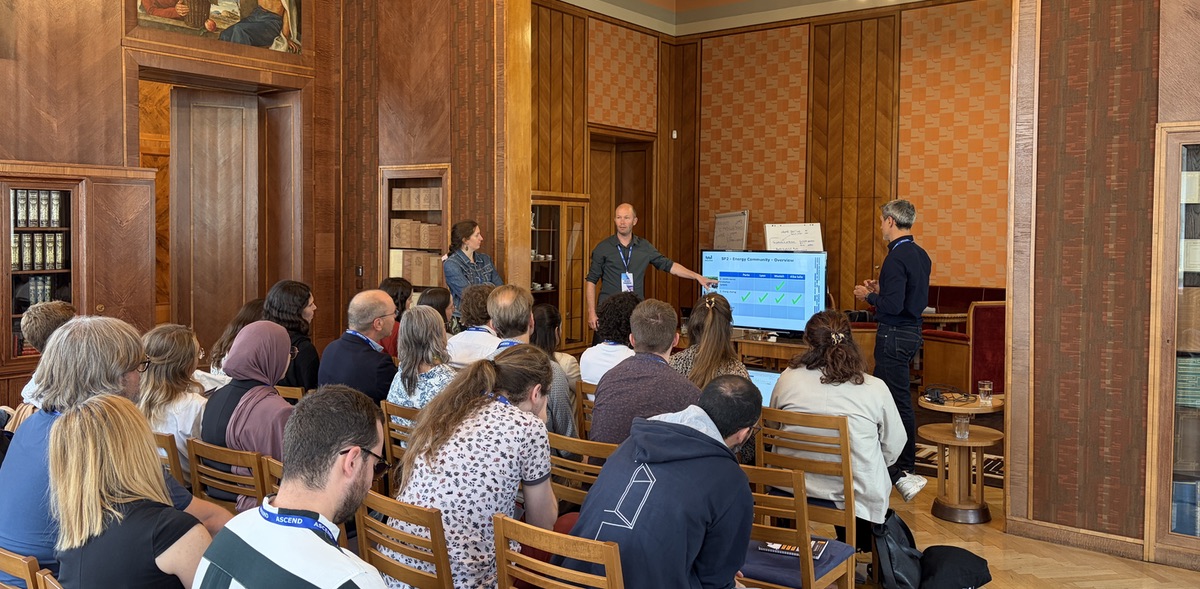
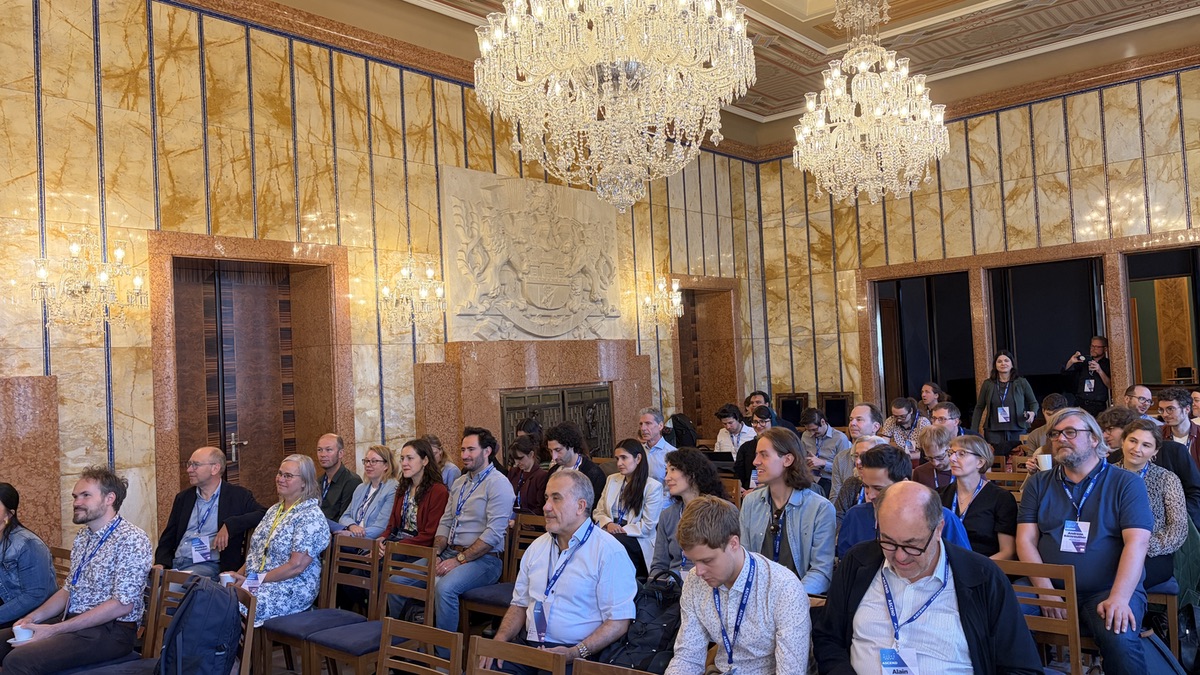
As Positive Clean Energy Districts move from demonstration projects towards wider deployment, financing is becoming one of the most important questions facing cities. Discussions during ASCEND's General Assembly in Prague focused not only on the barriers cities face, but also on the practical solutions and tools emerging to help overcome them.
Many climate-neutral district projects struggle to attract investment, not because they lack value, but because they are often perceived as too small, too complex or too fragmented to be bankable.
As Philippe Fournand explained, cities frequently develop projects that deliver environmental and social benefits but fail to fit traditional investment models. The challenge is therefore to move beyond individual projects and create financing structures capable of reaching the scale investors are looking for.
 |  |  |
Several examples presented during the session illustrated how this can be achieved.
One example came from Dijon, where a public holding fund has been established to aggregate projects into a larger investment portfolio. Rather than financing individual interventions separately, the structure pools projects together, creating sufficient scale to attract investment while helping cities retain strategic control. The approach demonstrates how project aggregation can transform initiatives that may be difficult to finance individually into investable programmes.
Another model discussed was Leuven Climate Action, which combines revenue-generating projects with initiatives that deliver strong social impact but do not generate direct financial returns. Revenues from profitable projects can be reinvested to support projects with high social value, creating a mechanism that balances financial performance with wider community benefits.
The discussion also highlighted the importance of demonstrating return on investment. As Tudor Drambarean (City of Alba Iulia) noted, investors ultimately need to understand the value being created. However, participants stressed that this value should not be measured solely in financial terms. Decarbonised housing, reduced energy bills, improved health outcomes and stronger communities all generate benefits that are often difficult to capture within traditional investment frameworks.
ASCEND cities shared concrete examples of how they are already working to bridge this gap.
 |  | 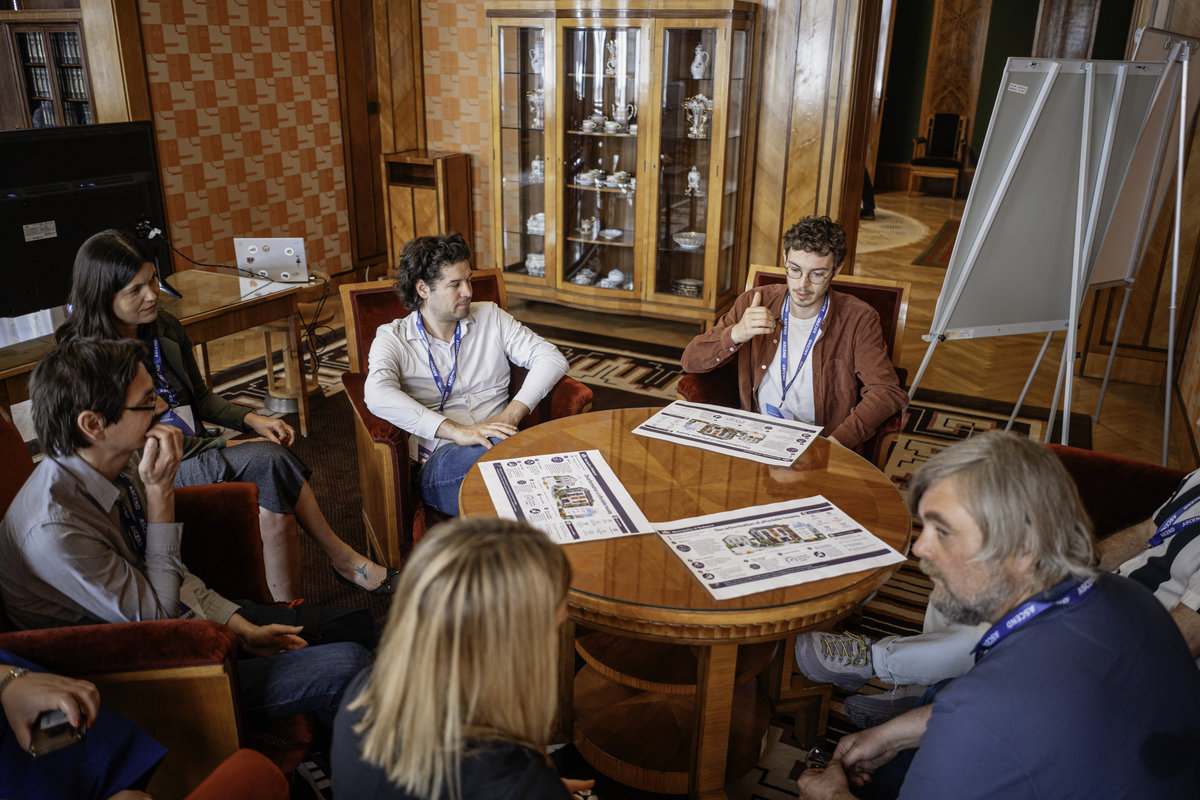 |
Munich presented a financing framework currently being developed with the Technical University of Munich. The initiative aims to create a platform that connects local capital with local projects, helping investors identify opportunities while giving project developers easier access to financing. In parallel, the city is compiling detailed project fact sheets covering costs, timelines, stakeholder engagement processes, and lessons learned. By documenting this experience, Munich hopes to make practical knowledge more accessible to municipal departments and future projects, reducing the need to reinvent processes each time a new initiative begins.
The discussion also highlighted that financing alone will not solve the replication challenge.
Representatives from Prague emphasised the importance of integrating technical, social and design considerations from the earliest stages of planning. Porto raised questions around social housing and regulatory frameworks, while Budapest stressed the need to create financing pathways that can be replicated once initial projects have demonstrated their viability.
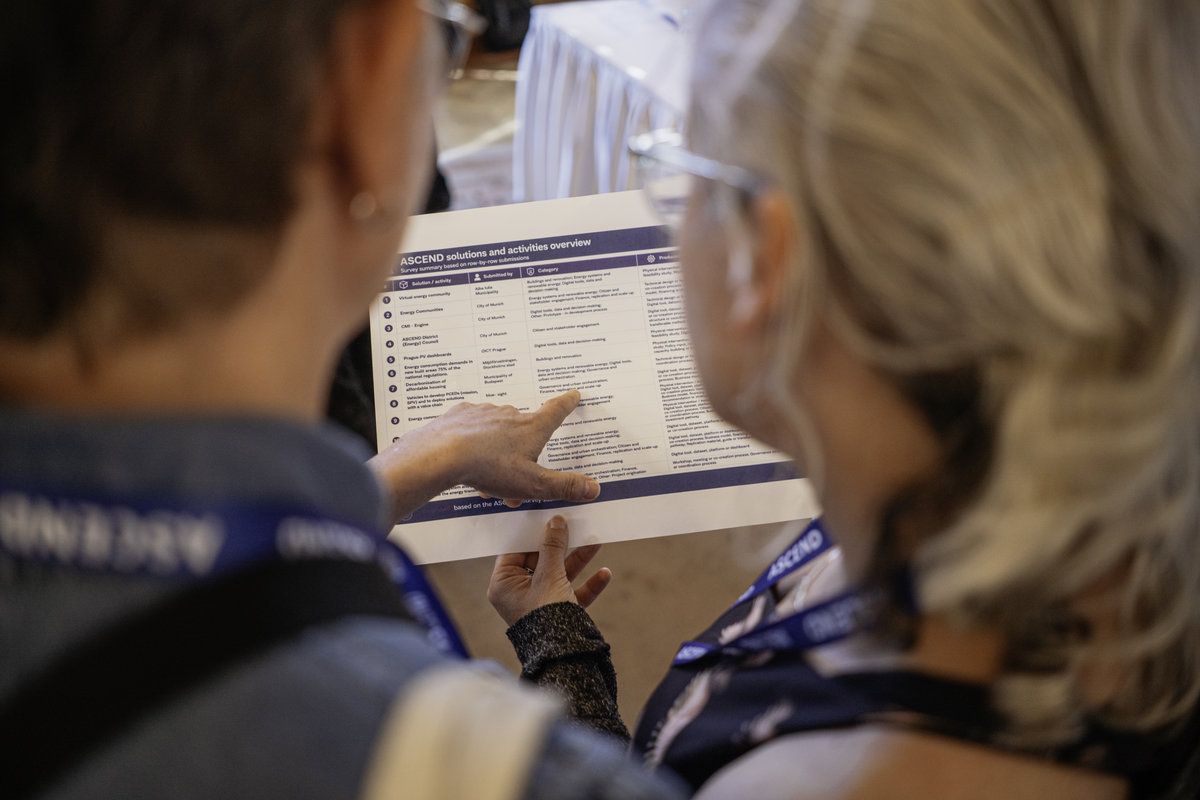
To support the next phase, ASCEND partners presented a number of tools designed to help cities move from experimentation towards wider implementation.
The Financial Instrument Matching Tool helps cities identify suitable funding sources and investors based on the characteristics of individual projects. By screening financing instruments, assessing market uptake and matching projects with relevant funding opportunities, it seeks to simplify what is often a fragmented and difficult financing landscape. While challenges remain, particularly around regulation and data availability, the tool is intended to provide cities with a practical starting point for attracting investment.
Monica Barroso also introduced the PCED Business Model Assembler, which supports cities in developing structured business models for Positive Clean Energy Districts, and the PCED Scale-Up Navigator, a roadmap that guides cities from pilot projects to large-scale deployment. The Navigator focuses on three stages: project initiation, implementation and impact scaling—encouraging cities to consider financing, governance, partnerships, citizen engagement and knowledge transfer from the outset.
Taken together, the examples and tools presented in Prague suggest that the challenge facing cities is no longer a lack of ideas or technical solutions. Instead, attention is increasingly shifting towards creating investment-ready projects, building robust business models and establishing practical pathways for replication. The next phase of the transition will depend not only on demonstrating that Positive Clean Energy Districts can work but on putting in place the financial and organisational structures needed to deliver them at scale.
 |


