Study visit to Vienna
Five years ago, the EU-funded Smarter Together project, in which Lyon, Munich and Vienna collaborated to test smart city solutions, came to an end. Where does the Simmering district, where the project was implemented at the time, stand today? A group of former project staff from the Smarter Together project and the currently running EU project ASCEND set out to answer this question.
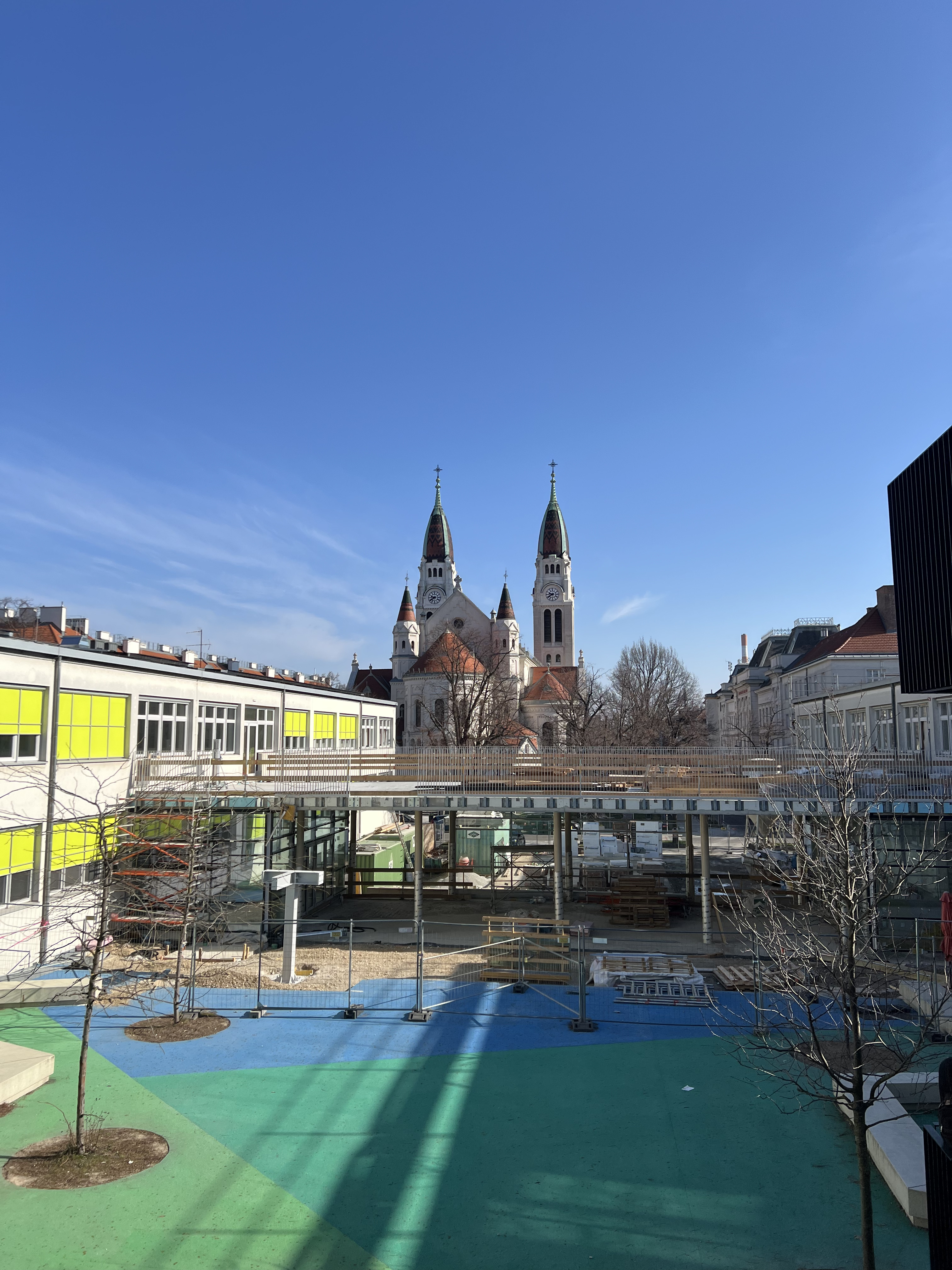
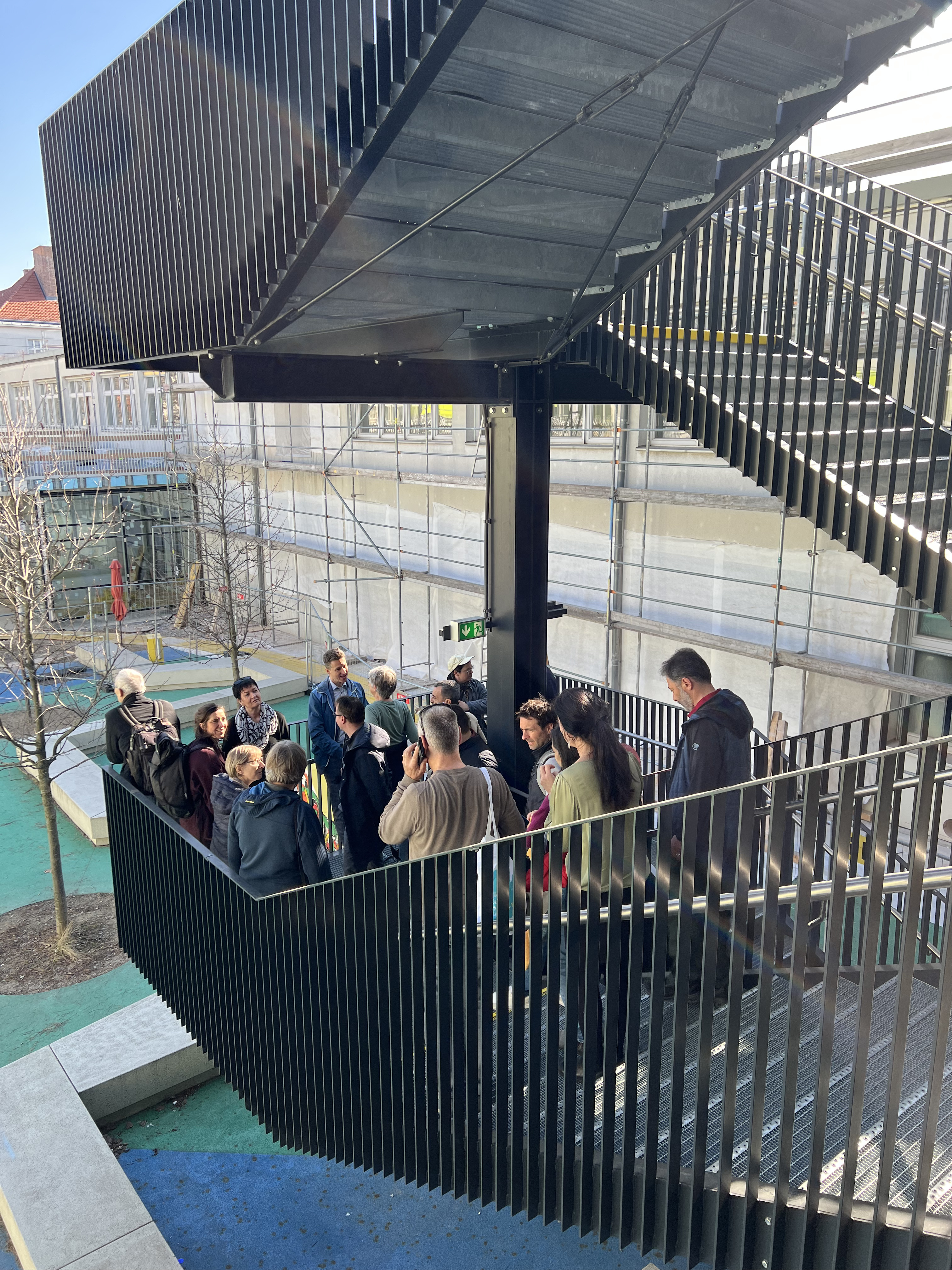
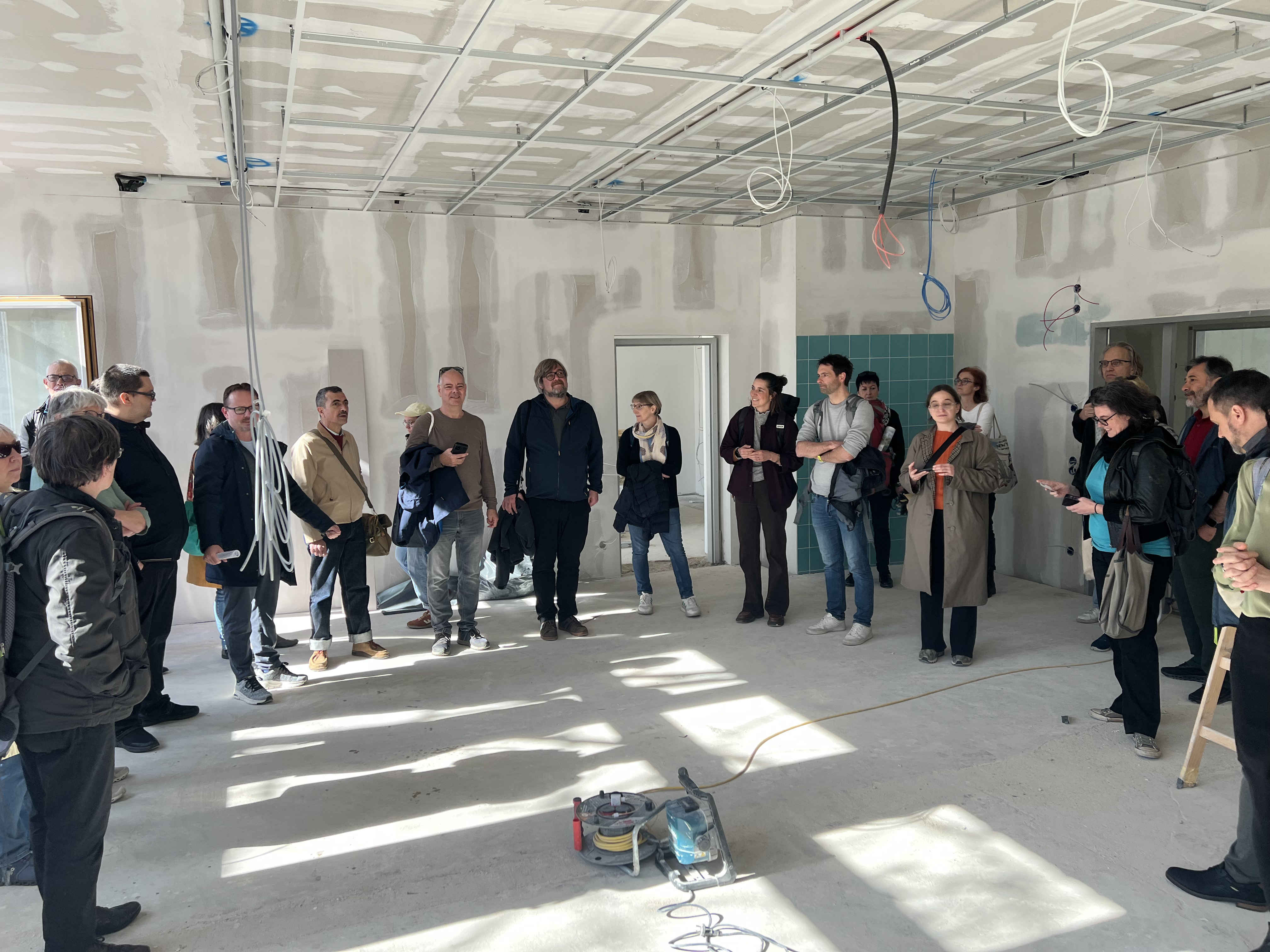
During the site visit, the partners gave a tour of the Enkplatz Secondary School. The school has been expanded with a new building phase. What makes it special is that the four sports halls have been built beneath the sports field, dug into the ground. In addition, the two school wings are being modernised to improve energy efficiency – whilst complying with heritage conservation requirements. A PV system is installed on the roof of the school building. Modern classrooms and a canteen have been created as part of the modernisation.
Next stop: mobility station.
As part of Smarter Together, the first bicycle mobility station in Vienna was ambitiously created – complete with e-bikes. Conveniently located next to an S-Bahn station, WienMobil bikes can still be hired here. The mobility station marks the start of the city-wide roll-out. There are now around 80 such stations – with varying facilities – in Vienna.
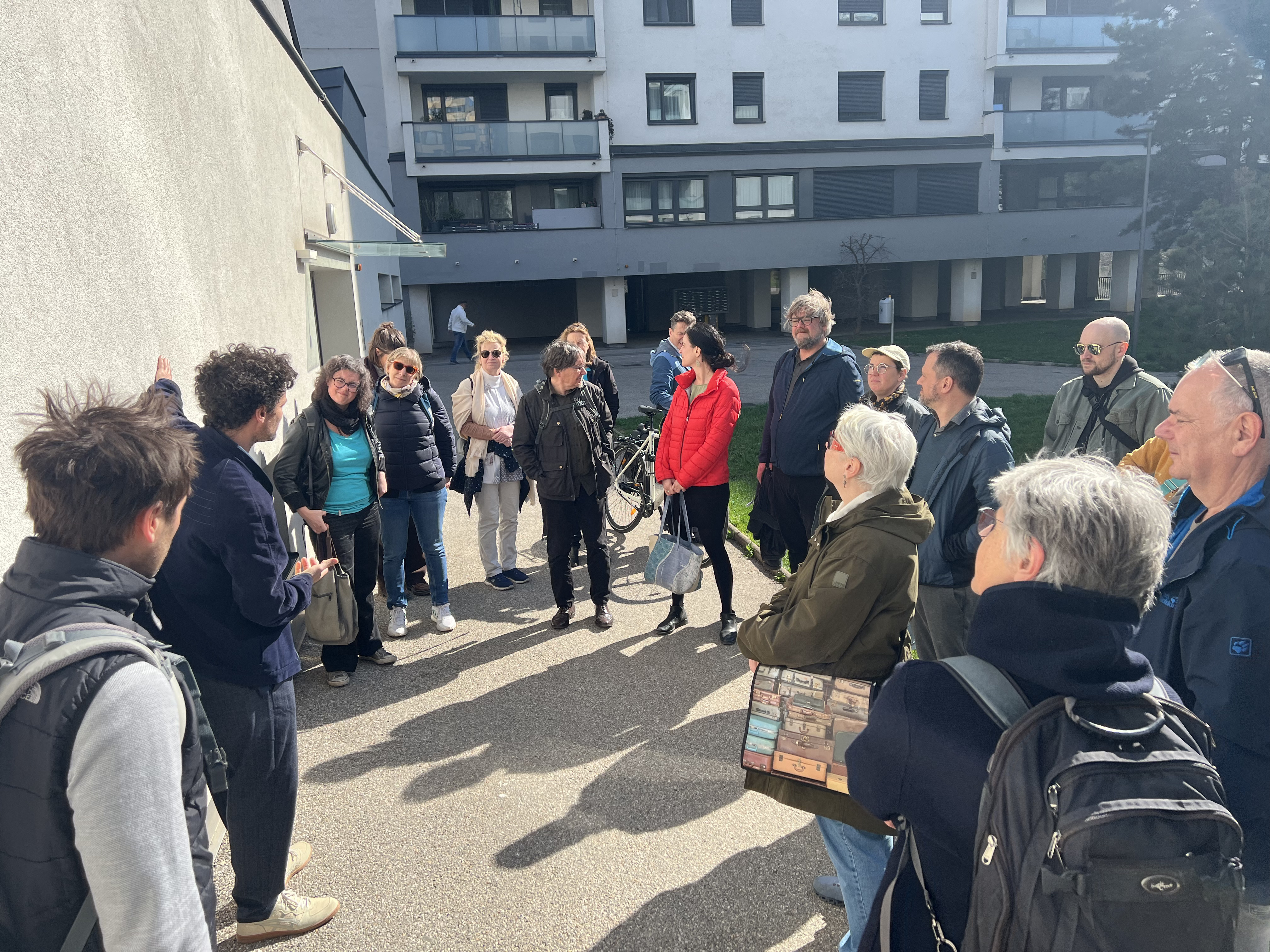
A few steps further on is Hauffgasse. A residential area with several high-rise blocks, which were in poor condition at the time. This is where Smarter Together was able to get involved and, amongst other things, help with the energy-efficiency upgrades to the buildings. Amongst other things, a communal room was also refurbished. An electric car-sharing station rounded off the offering. Here, the neighbours lovingly looked after a particularly interesting vehicle. The sharing station is no longer in operation, as other car-sharing services have become established.
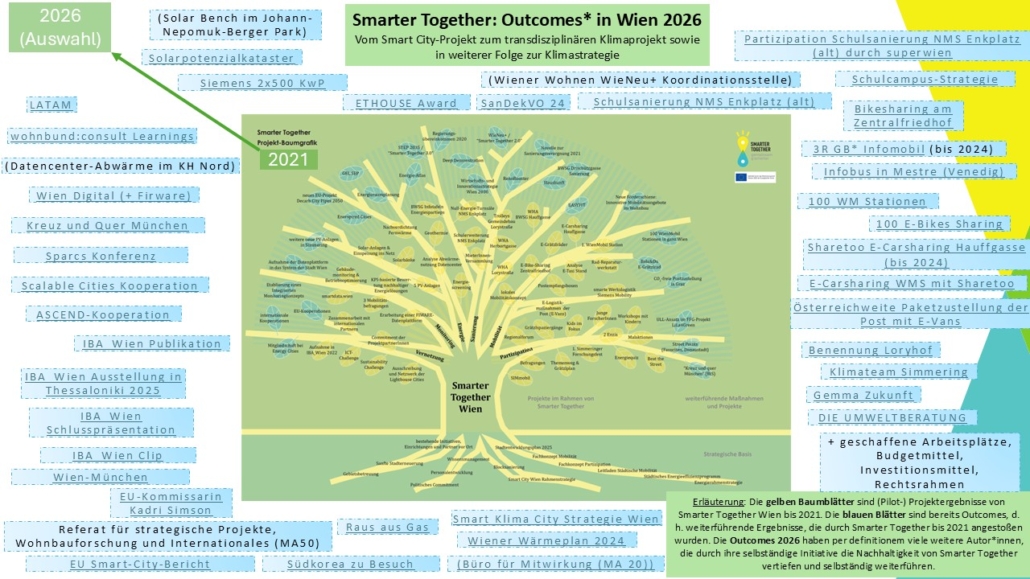
What emerged from Smarter Together
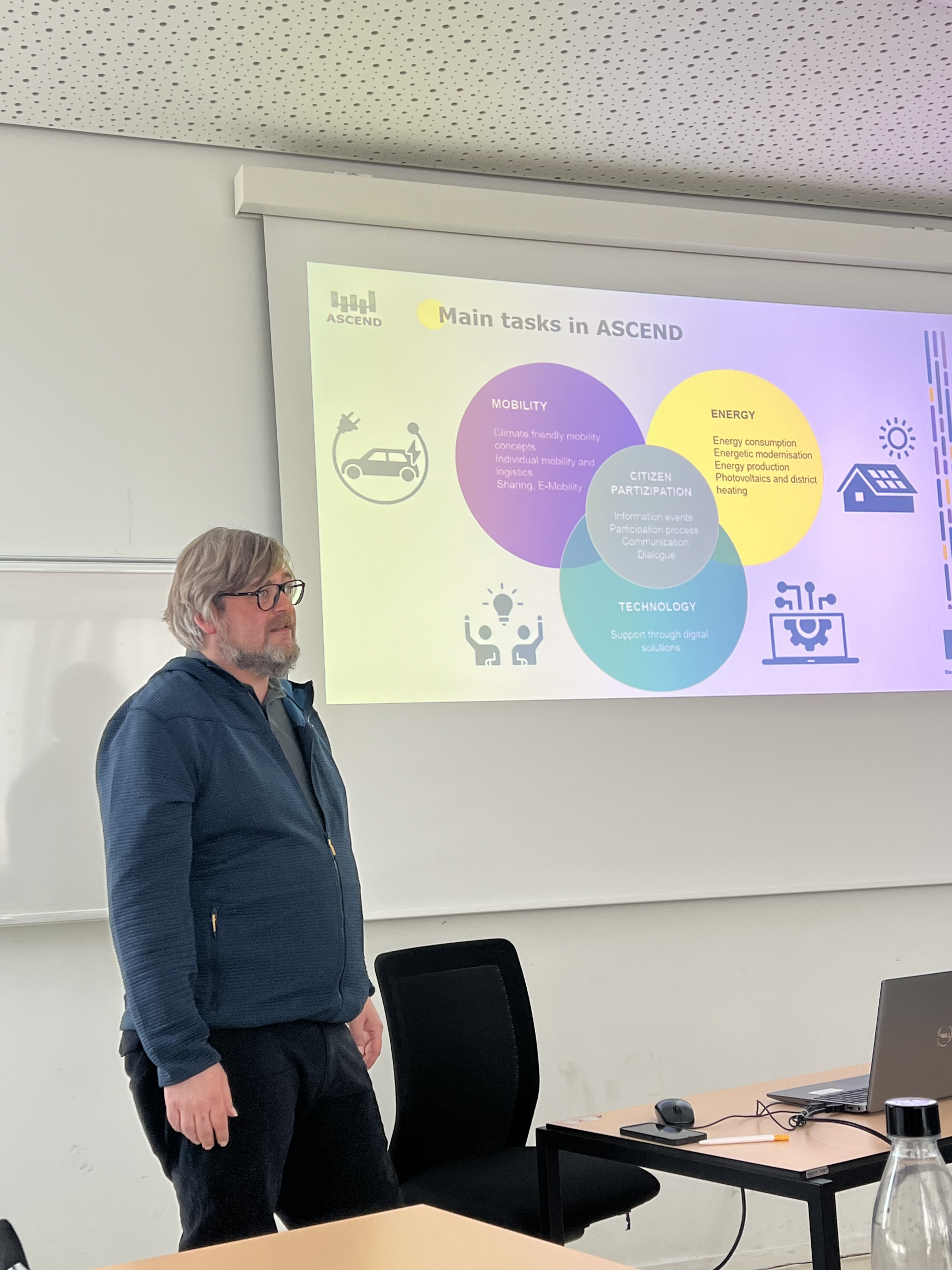
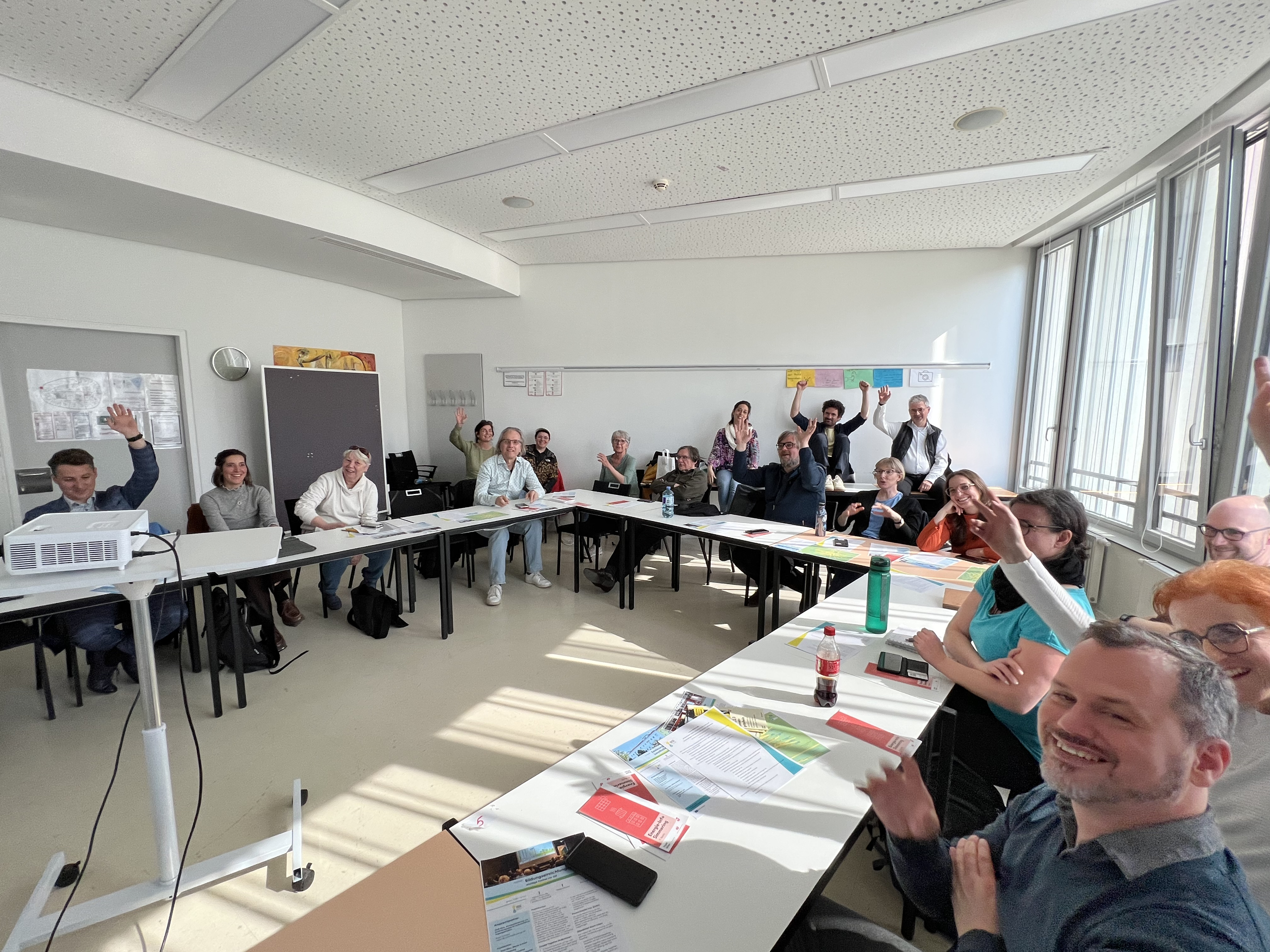
At the VHS Simmering, participants were finally able to share their experiences. Topics included the City of Vienna’s heating plan – which also provides for cooling – and the ‘100 Projects: Off Gas’ initiative. The urban regeneration programme WieNEU+ demonstrates how climate-friendly, sustainable and resource-efficient innovations in the field of building technology are being implemented in selected districts of Vienna. In contrast, the measures from the Munich-based EU project ASCEND were presented, which emerged as a result of the EU project Smarter Together.
Bernhard Klassen, co-organiser of the site visit, thanked everyone involved: “We can see that a great deal has been initiated and implemented jointly in both cities. We are also familiar with this from Lyon. Comparable European projects bring real added value to our cities of tomorrow!”
by Andreas Baernreuther, City of Munich