
City Centre
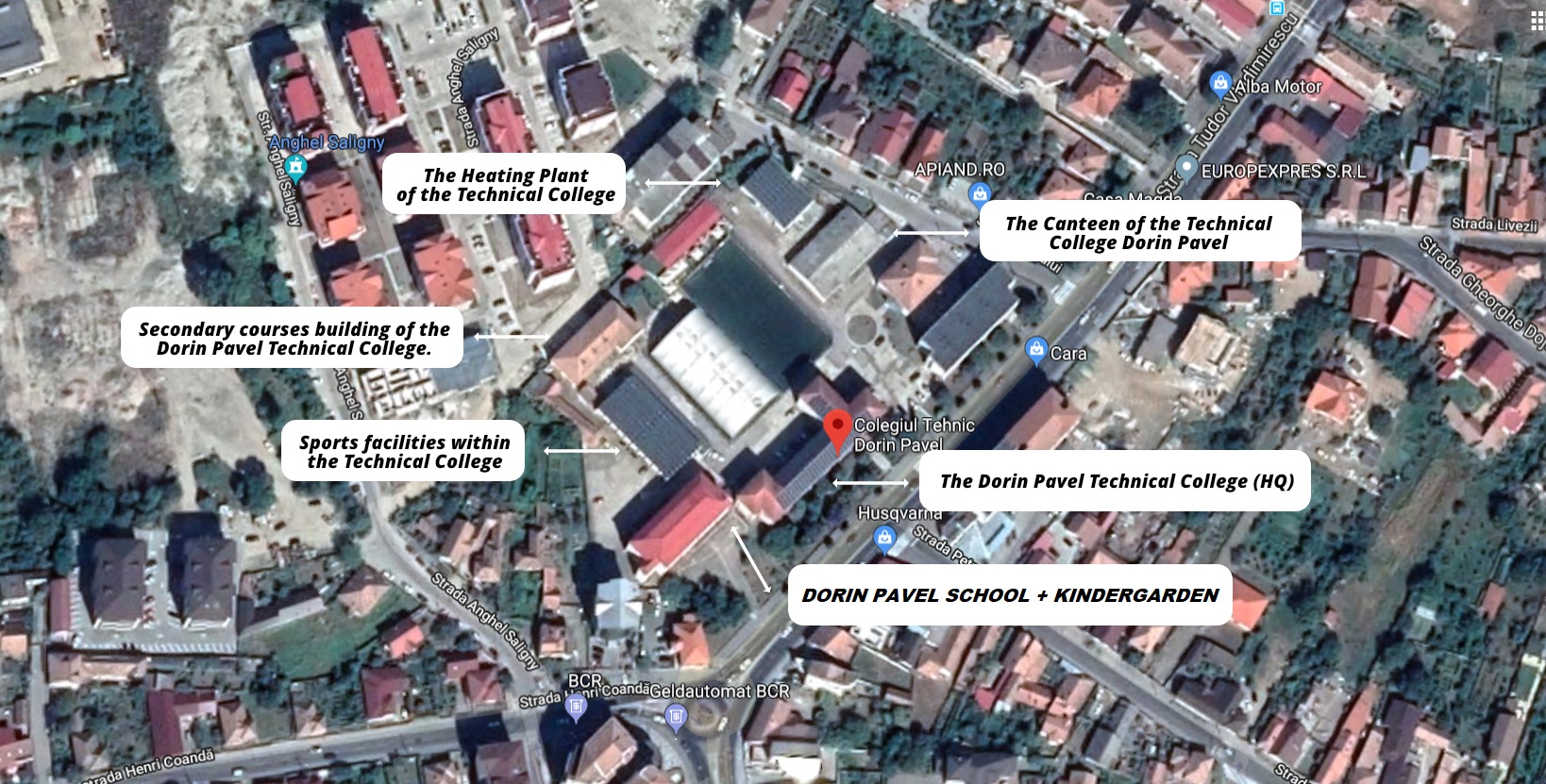
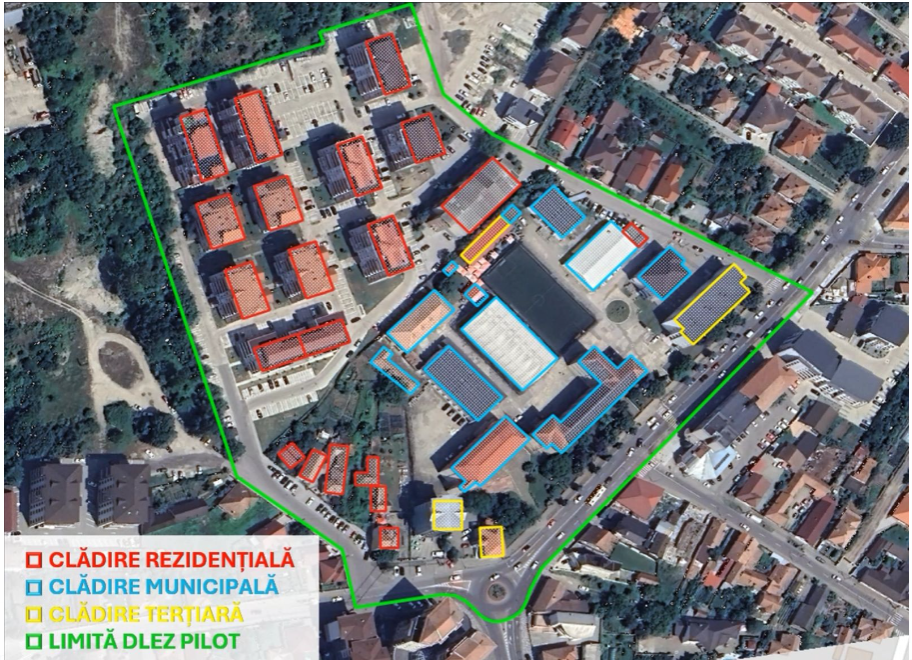
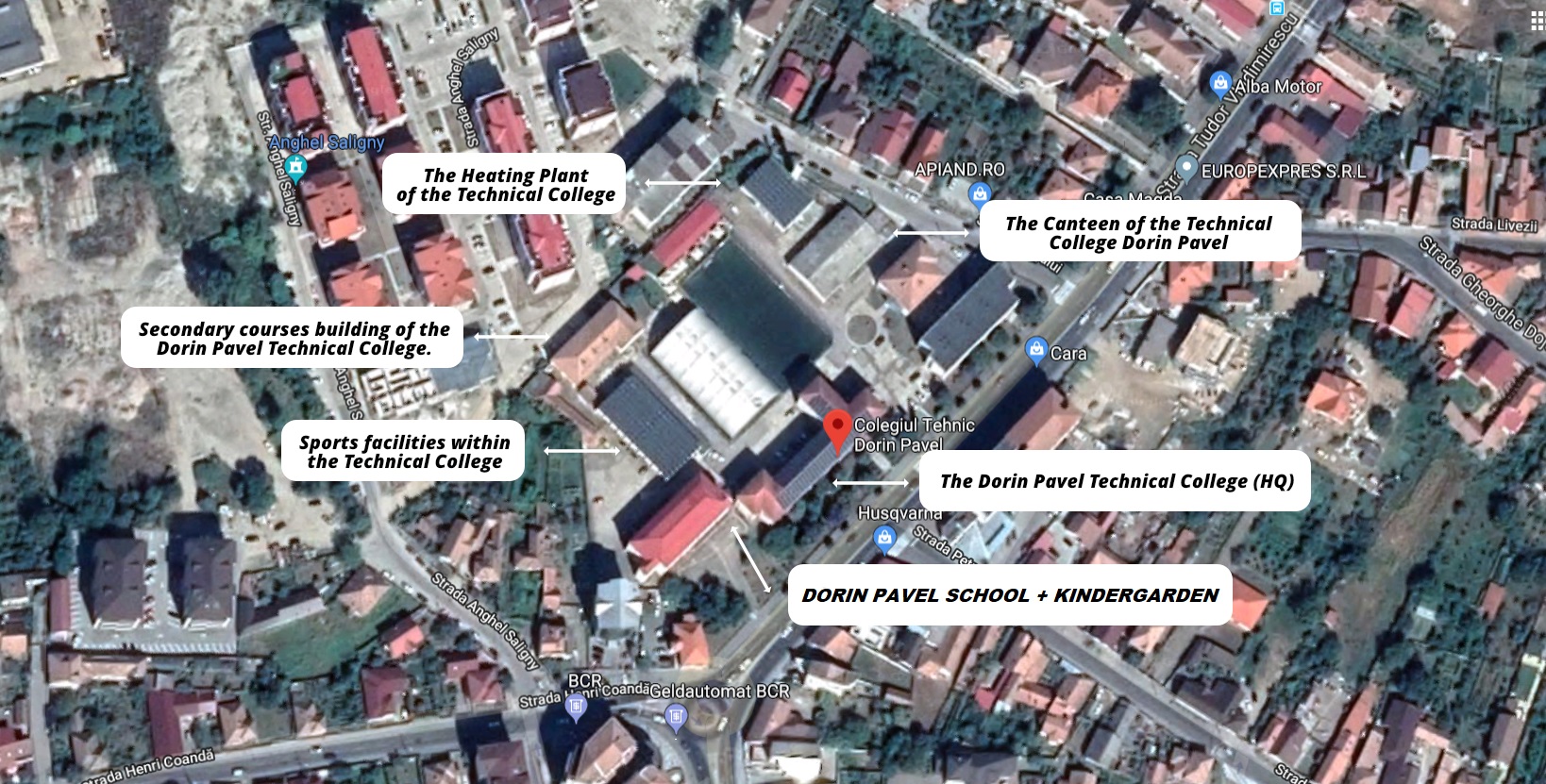
The district is home to 22,200 inhabitants and the workplace for another 11,203.
At the end of the project, the city centre of Alba Iulia will be set on its pathway towards climate neutrality and energy resilience. The heat energy demand will be supplied by 3 renewable heating systems, reducing the energy demand by 70%. 7 electric renewable energy systems will be implemented by 2028. In total, 6 km of bike lanes will be created, and 10,000 m² of streets will be pedestrianised.
The city will test the following SPs:
- SP1: open data platform with front-end input capabilities for citizens; district energy management systems; digital monitoring infrastructure; KPI Engine,
- SP2: new services and business models approach for energy communities;
- SP3: serial refurbishment; building energy management systems; new construction as NZEB; standard PV on roofs, self-consumption and storage in a local and regional grid;
- SP4: charging hubs and stations for cars, e-vehicles and freight logistics, new lanes for bikes and cargo bikes; charging stations for electric buses; redesigning public spaces with small street interventions.
Highlights of 2025
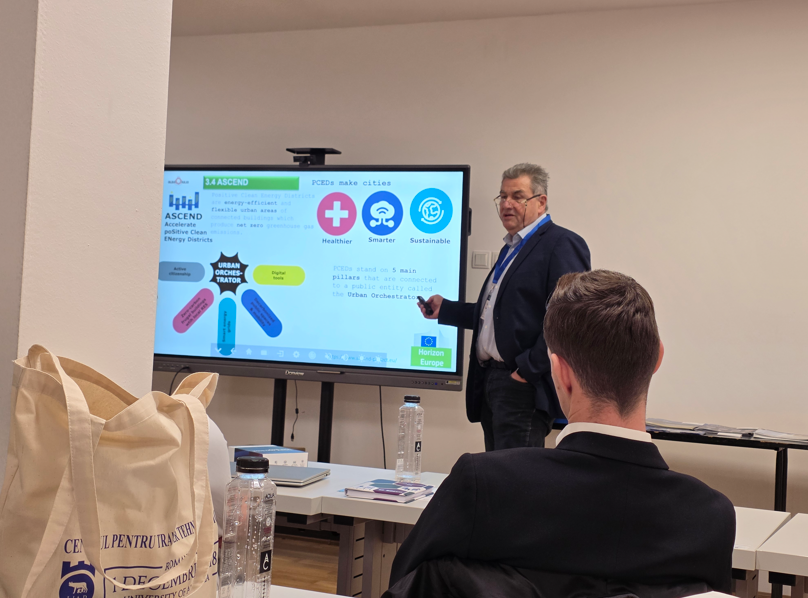
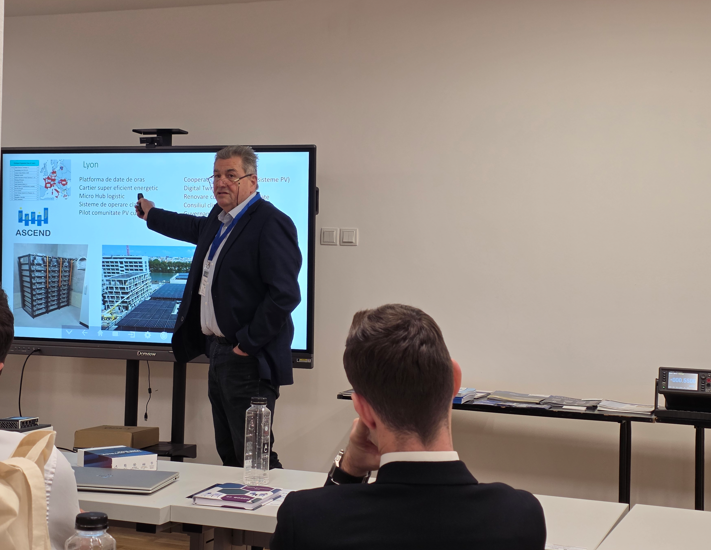
Alba Iulia Municipality showcases local energy transition efforts at the “Innovation and technological transfer” Symposium of the 1 Decembrie 1918 University
The Municipality of Alba Iulia participated on 28 November 2025 in the fifth edition of the scientific symposium “Contributions to Innovation and Technology Transfer Activities. Examples of Good Practices in the Centre Region”, hosted by the 1 Decembrie 1918 University of Alba Iulia through its accredited Center for technological transfer (CTT-UAB).
The event brought together experts from academia, research institutions, companies, and public authorities, addressing innovation, industrial digitalisation, and energy transition. In the session dedicated to energy innovation, the City of Alba Iulia presented the contribution and progress recorded at local level in the field of energy efficiency and decarbonisation, as outlined in the programme item “Developments in Energy Efficiency Projects in the Municipality of Alba Iulia”, delivered by municipal representative and project team member Valentin Voinica.
Alba Iulia’s contribution was positioned within its strategic role as a committed partner in the ASCEND EU project, where the municipality is advancing its ambition to develop a Positive Clean Energy District (PCED) area. Through ASCEND, the city is learning how to prepare and transform a selected district into a functional Positive Energy District, using data-driven management, smart digital solutions, and integrated local energy planning.
The symposium provided an opportunity to share:
- The city’s methodological approach to defining the PCED area
- Insights from the ongoing work in ASCEND on replicable PED models
- Current and future municipal projects supporting energy efficiency, building renovation, distributed renewable generation, and digital monitoring
- The importance of cross-sector collaboration between municipalities, universities, private companies, and regional actors.
The collaboration with UAB and CTT-UAB strengthens the city’s capacity to integrate research, technology transfer, and applied innovation into public policies and EU-funded initiatives. The Municipality of Alba Iulia will continue to work alongside local academic partners and the ASCEND consortium to turn the PCED vision into a practical, scalable model, supporting the city’s long-term commitment to decarbonisation, energy efficiency, and smart urban development.
 |  |